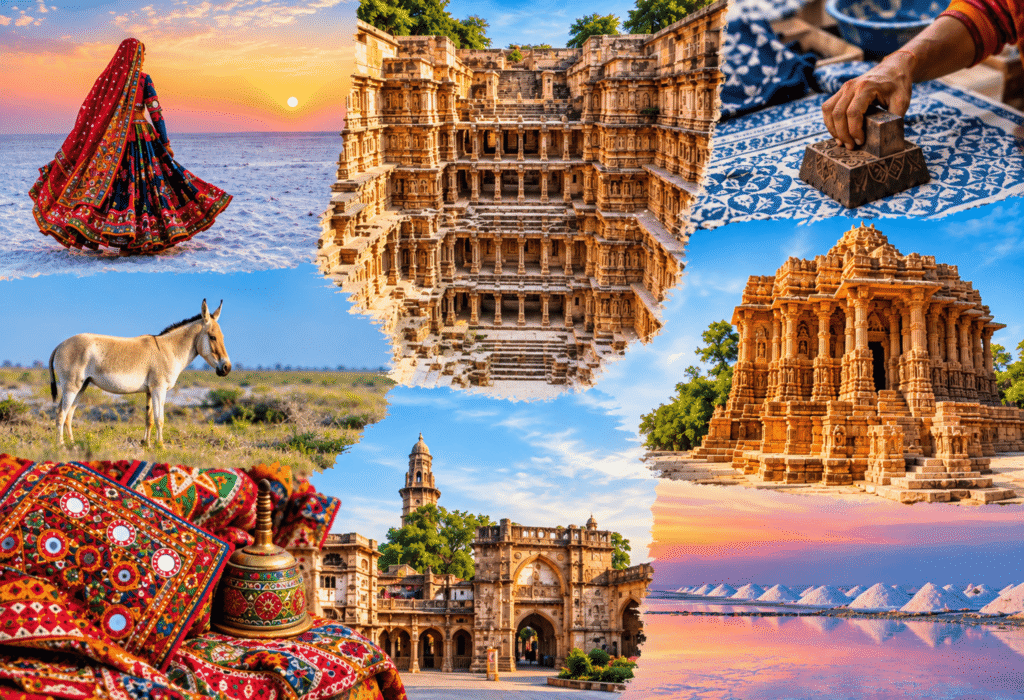
The Rann of Kutch is special in that it houses the world’s largest seasonal salt desert that turns from a blinding white crust into a vast wetland, ancient craft traditions that are otherwise found nowhere on earth, a unique mud and mirror architecture and unique nomadic cultures that are absent from the rest of the world.
Why Is the Rann of Kutch Landscape So Unusual?
Kutch has a unique topography which is very dramatic owing to a very rare geological history. The shallow bay was once connected to the Arabian Sea, but tectonic movements separated them, resulting in the formation of enormous salt deposits that turn to a brilliant white in the dry season.
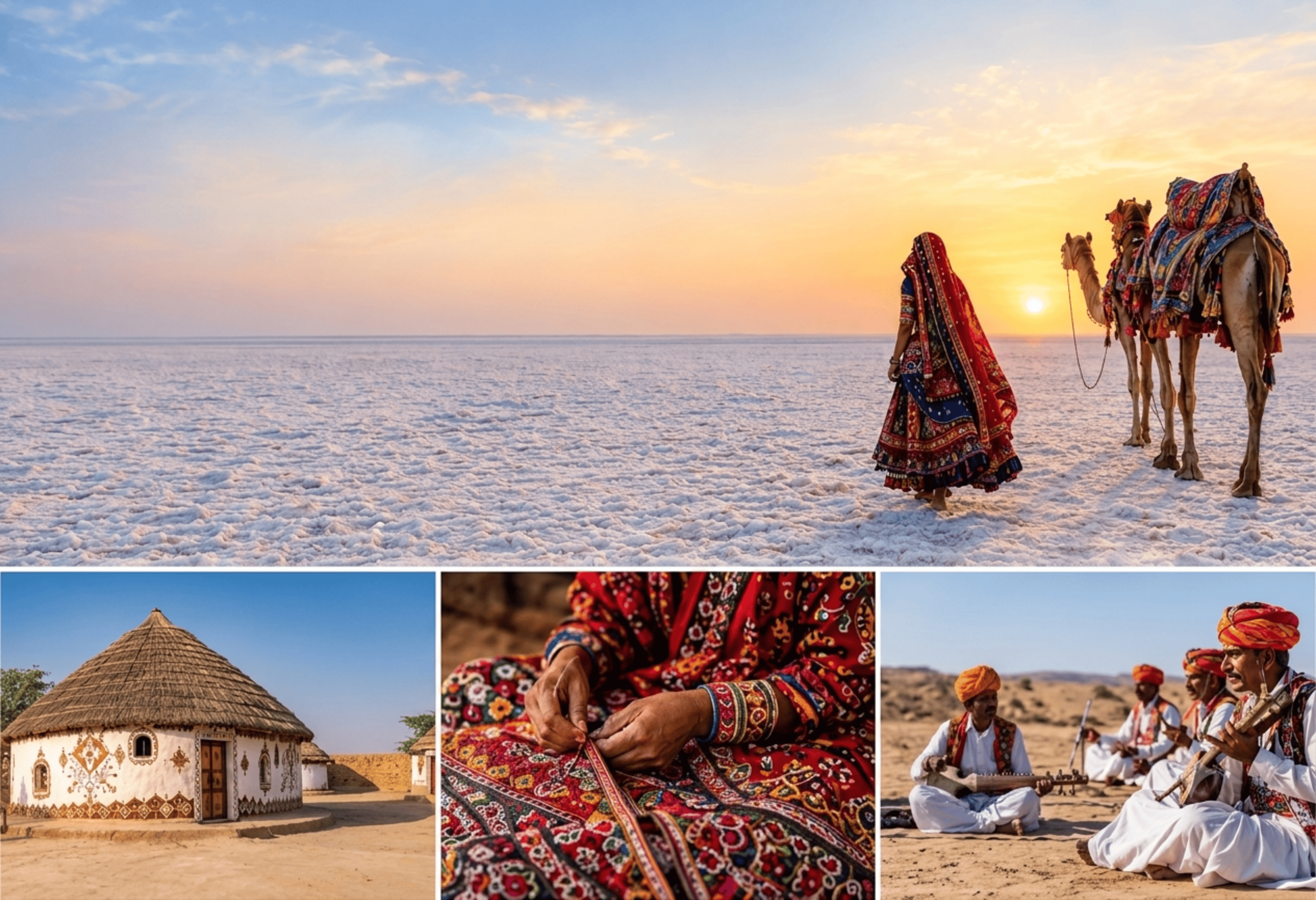
- The White Desert: The salt flat extends for thousands of square kilometres, and reflects on the sky, creating surreal horizons.
- Seasonal Transformation: In the monsoon season, rain makes the desert waterlogged, and then it turns to a hard, flat, crystalline surface in the heat.
- Ecological Diversity: The area is a seamless grassland, thorn forest and saline flat habitat for rare wildlife.
For those who wish to explore these otherworldly landscapes in person, the region is frequently a highlight of Gujarat Travel Itinerary, which may feature a dedicated Gujarat Travel Itinerary to visit both the salt flats and surrounding nature reserves.
How Does Local Culture Shape the Rann of Kutch?
In addition to its rugged natural beauty, Kutch is a storehouse of traditional arts and crafts practices. Over generations, the hard desert landscape has become a site of fine creativity for the hands of the artisan communities.
- Mud and Mirror Work: Traditional round houses (bhungas) are adorned with mud plaster and tiny mirrors to reflect sunlight and keep interiors cool.
- Indigenous Textiles: Villages in the district have their unique craftsmanship in heritage techniques such as Rogan painting, block printing and tie-dye of bandhani dyes.
- Folk Music and Dance: The haunting melodies of the Jat and Surf (folklore) musicians, which are influenced by the Sufi movement, are reflective of the great isolation and beauty of the desert.
For an immersive experience of these living traditions, consider taking a cultural tour, such as the Gujarat and Rajasthan Heritage Tour to get in touch with local artisans and cultural heritage.
What Are the Highlights of Exploring Kutch Villages?
A journey through Kutch is incomplete without stepping inside its craft-centric rural hamlets. Each village holds a distinct specialty passed down through centuries.
| Village / Location | Craft or Attraction Specialty | Why Visit? |
|---|---|---|
| Dhordo | Gateway to the White Desert | Perfect base for viewing the salt flats during moonlit nights. |
| Nirona Village | Copper Bell Art & Lacquer Work on Wood | One of the few places globally preserving rare metal and wood crafts. |
| Hodko | Traditional Mud Art and Embroidery | Known for exquisite mirror work and authentic rural hospitality. |
| Bhuj (Hub) | Prag Mahal Palace & Aina Mahal | Serves as the historical heart for exploring regional royal heritage. |
For comprehensive travel planning advice and inspiration on hidden regional gems, you can read more expert perspectives on the Les Clefs de Inde.
Frequently Asked Questions
When is the best time to visit the Rann of Kutch?
October to March is the best time of the year to visit. The weather is cold in the winter season, the salt pan is completely dried off and the Rann Utsav cultural festival is held here.
Can you walk directly on the White Desert salt flats?
Yes, visitors can go for a walk or ride with camel carts over the hardened salt crust when the weather is dry. But there is very little vehicular access permitted and restricted locally to preserve the delicate ecology.
What makes the local bhunga houses special?
Bhunga houses are mud huts in circular form which are designed against strong earthquakes and hot temperatures of the deserts. The thick walls and conical roofs provide naturally good insulation and maintain a cool temperature inside in summer and warm temperature in winter.
Do I need a special permit to visit the Rann of Kutch?
Yes, as Rann of Kutch is situated in close proximity to the international border with Pakistan, a simple entry permit must be taken at the Bhirandiyara check-post to enter the White desert at Dhordo.
Key Takeaways for Your Next Desert Journey
The Rann of Kutch offers an unforgettable intersection of surreal geology and thriving human resilience. By pairing the blinding expanse of the White Salt Desert with immersive visits to indigenous craft villages, travelers gain a profound appreciation for one of India’s most extraordinary cultural landscapes. Start planning your custom expedition today to experience the magic of western India!